Seismic Retrofit
Ductility added to a frame that has to survive a demand it was never designed for.
Composite fiber external strengthening entered structural engineering as a seismic technique. Column strengthening was the original use for seismic upgrades, and as the system developed over many years of university and Federal testing, numerous additional applications developed — axial capacity enhancement, structural repair from corrosion damage, and bending and shear upgrades. Delta participated in a great deal of the university testing of FRP carbon and e-glass materials during the initial introduction of the system in California, after the Loma Prieta earthquake.
Ductility, not just strength
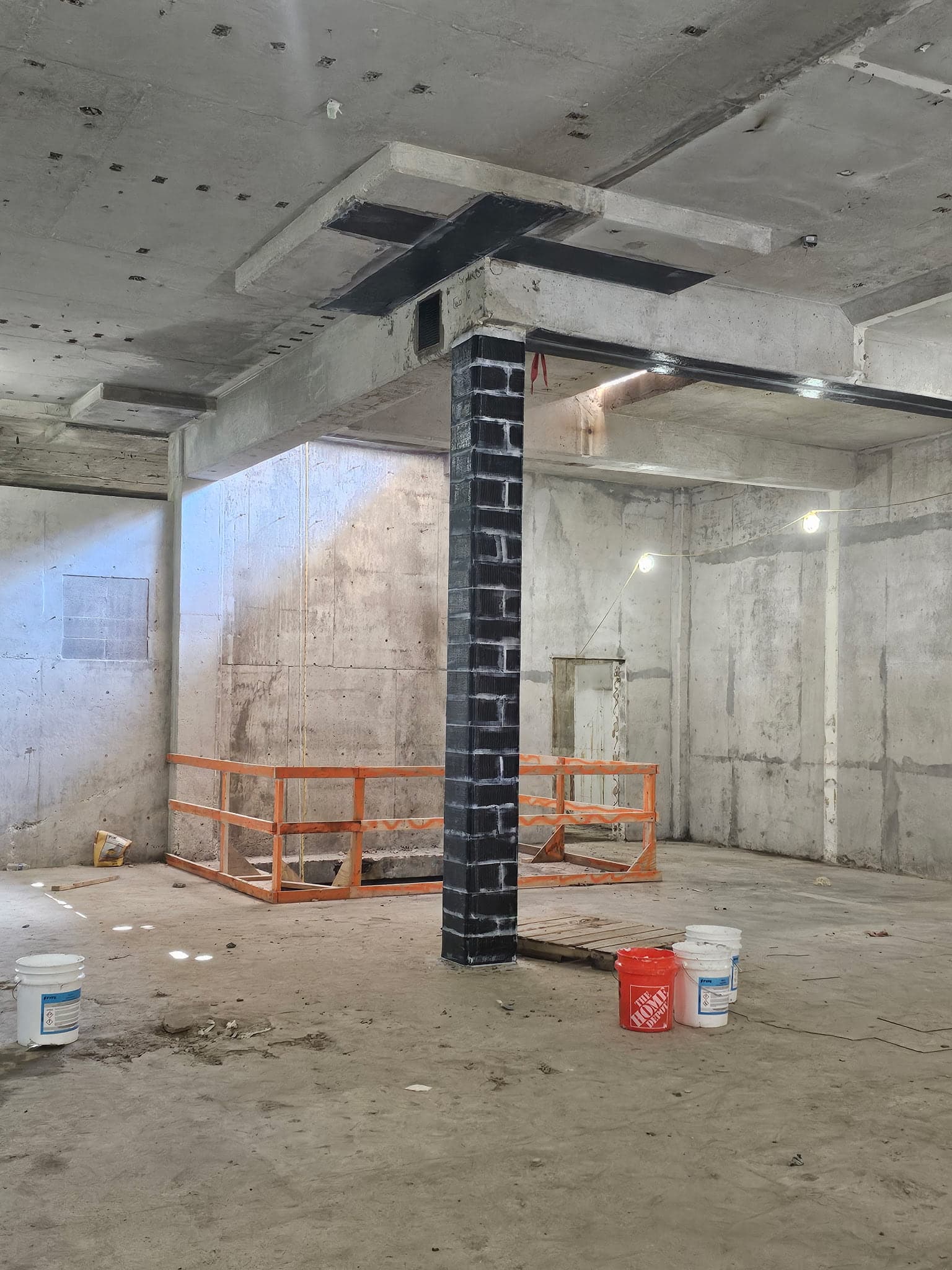
A seismic upgrade is rarely a question of raw capacity. It is a question of ductility — whether a member can deform under a demand it was never detailed for and still carry load. Wrapping a column confines the section: the concrete inside is held together through cyclic displacement, the member keeps capacity where it would otherwise lose it, and the failure it is heading for stops being the brittle one. E-glass is often the right fibre for this rather than carbon, because it can slightly flex and distribute the load.
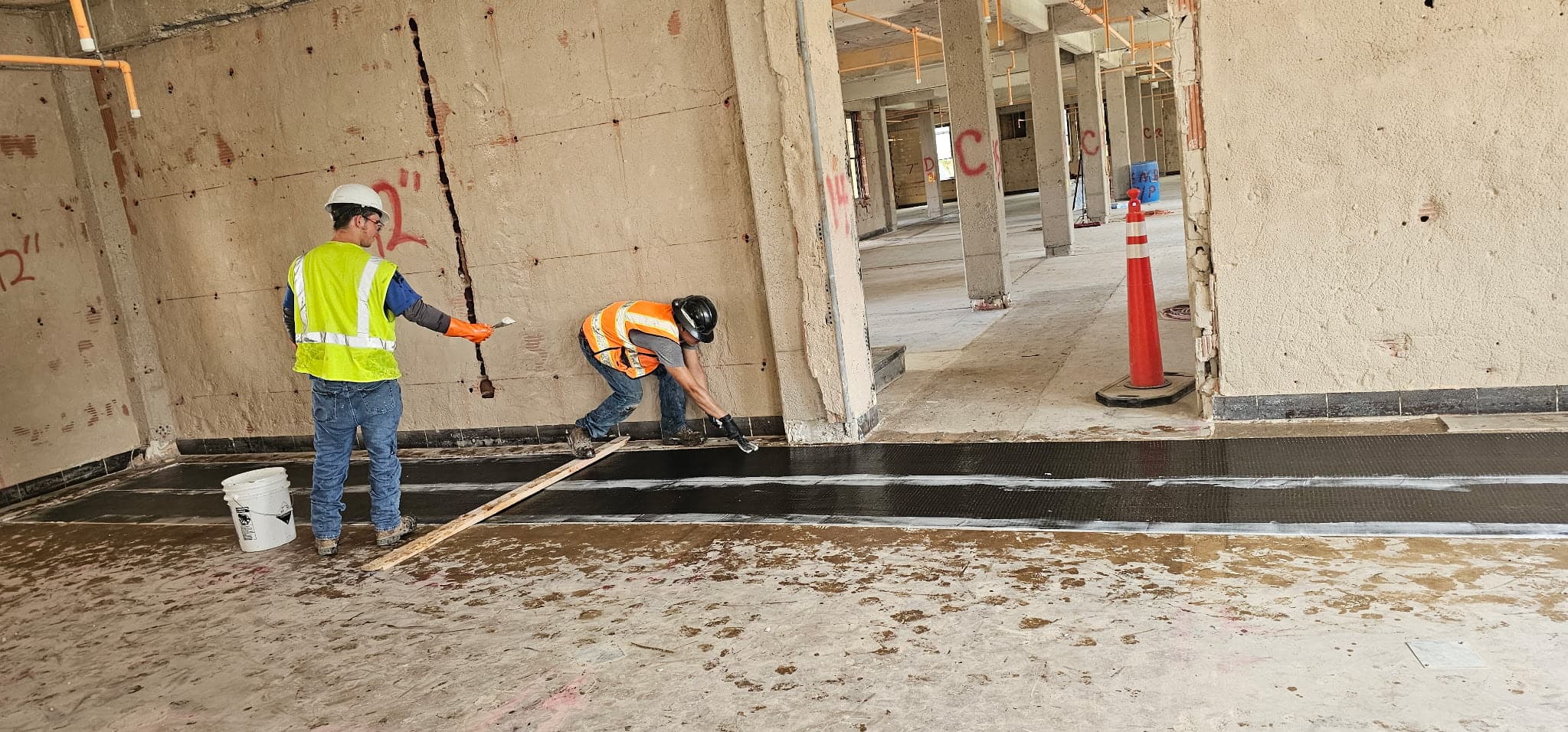
The technique was invented for this. Everything else it does came afterwards.
- 01
Code Compliance
Meet the new code requirements set forth for each state.
- 02
Column Confinement
Displacement-ductility enhancement and confinement — the original seismic application of composite wrap.
- 03
Shear and Flexure
Shear strengthening and flexural enhancement where the seismic demand exceeds what the member was detailed for.
- 04
Transportation Structures
Seismic retrofit of structural components, alongside increased load ratings and rehabilitation of corroded and distressed members.
- 05
Chimneys, Tanks and Silos
Seismic retrofits, shear strengthening, flexural enhancements, confinement, and repair of corrosion or other structural degradation.
- 06
Added Mass
FRP's high strength to weight ratio means the retrofit adds almost no mass — and in a seismic problem, added mass is added demand.