AT and T Beer Garden Beam Strengthening
Targeted carbon fiber reinforcement addressed negative-moment flexure in an existing concrete T-beam at the AT&T Beer Garden.
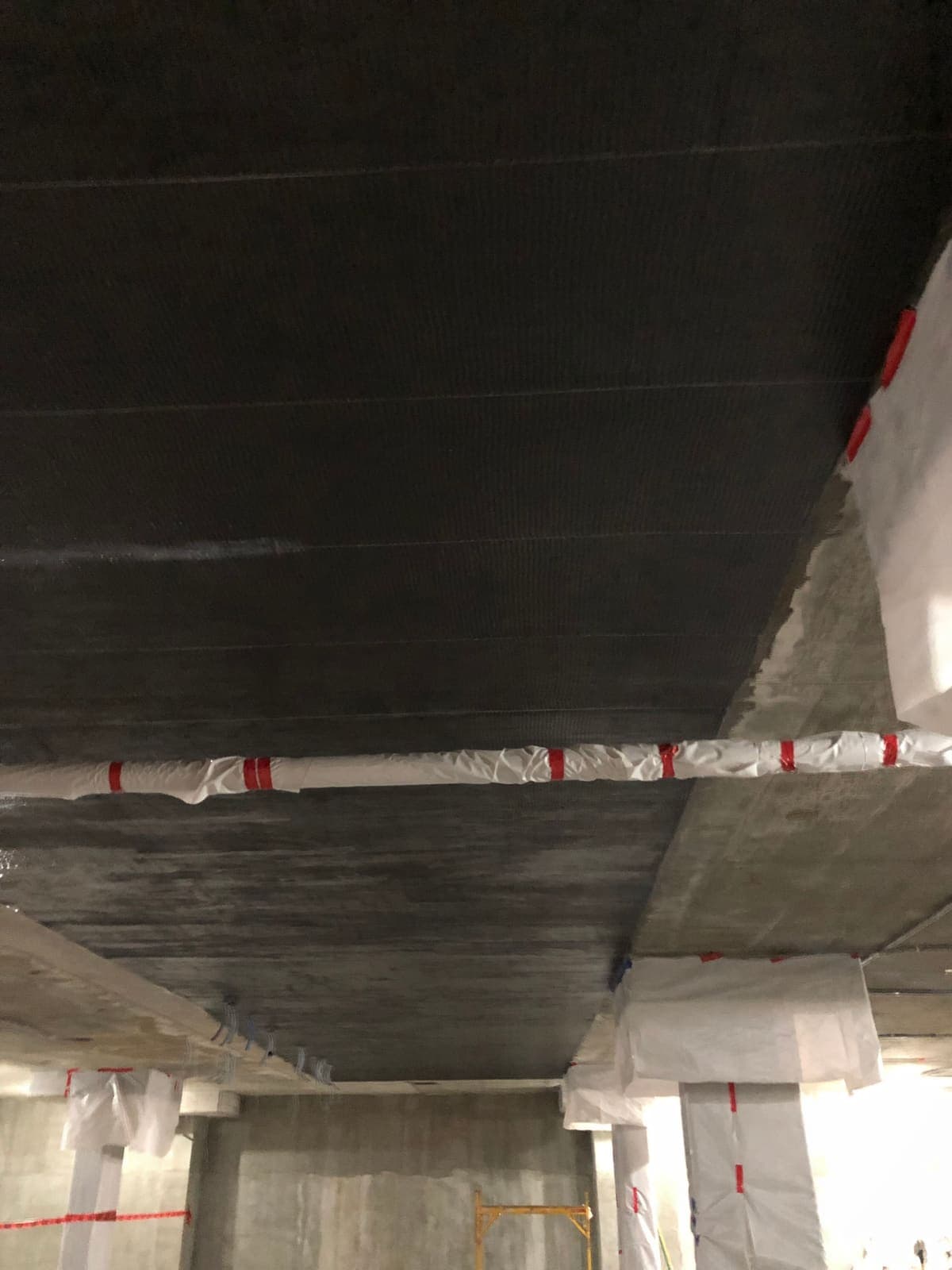
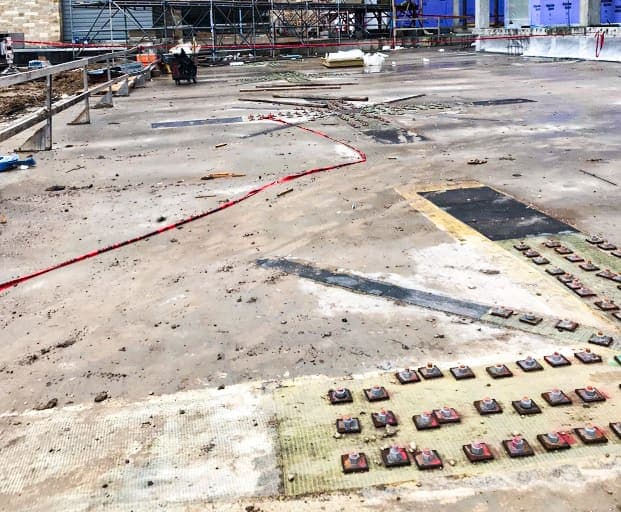
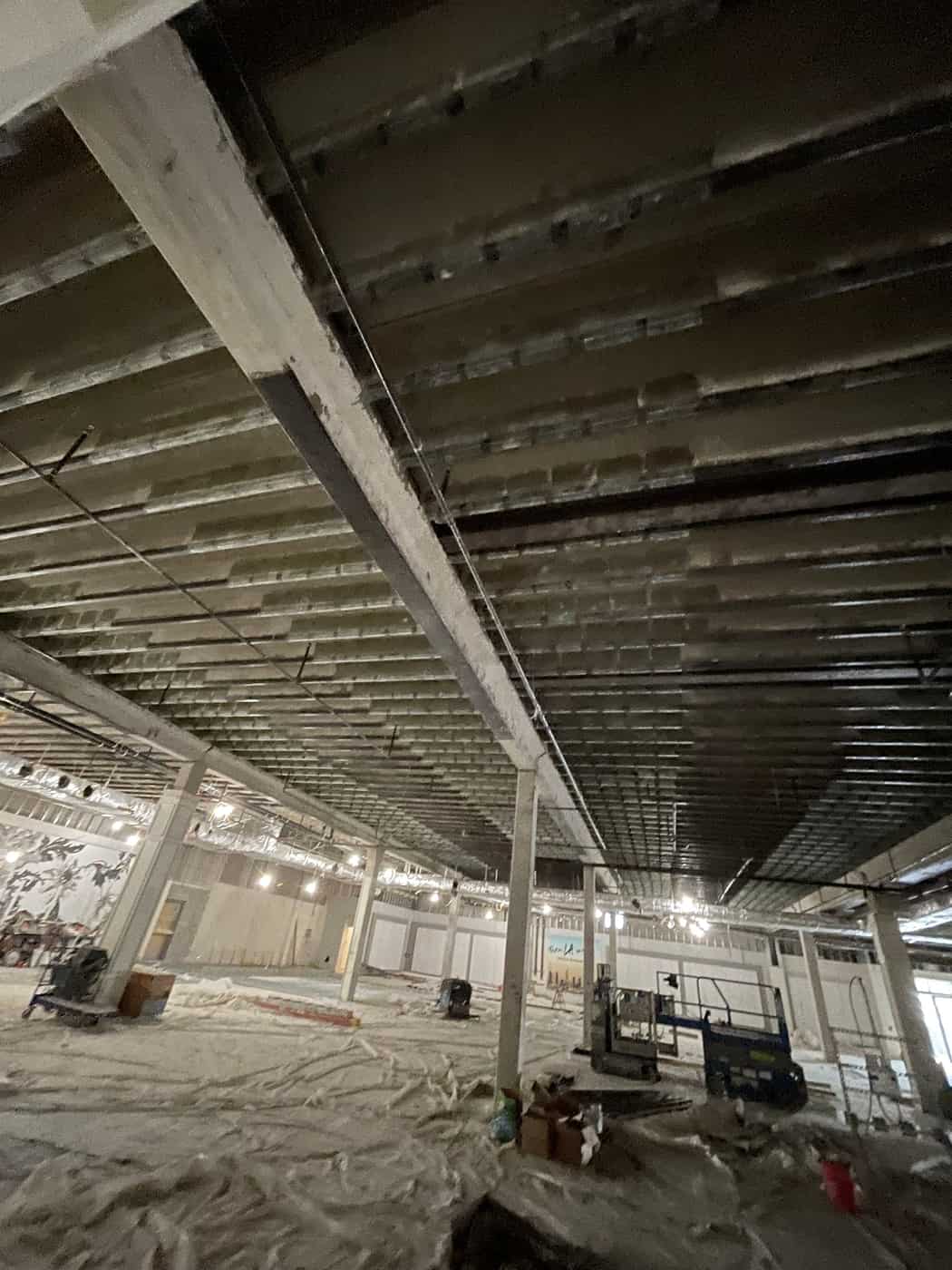
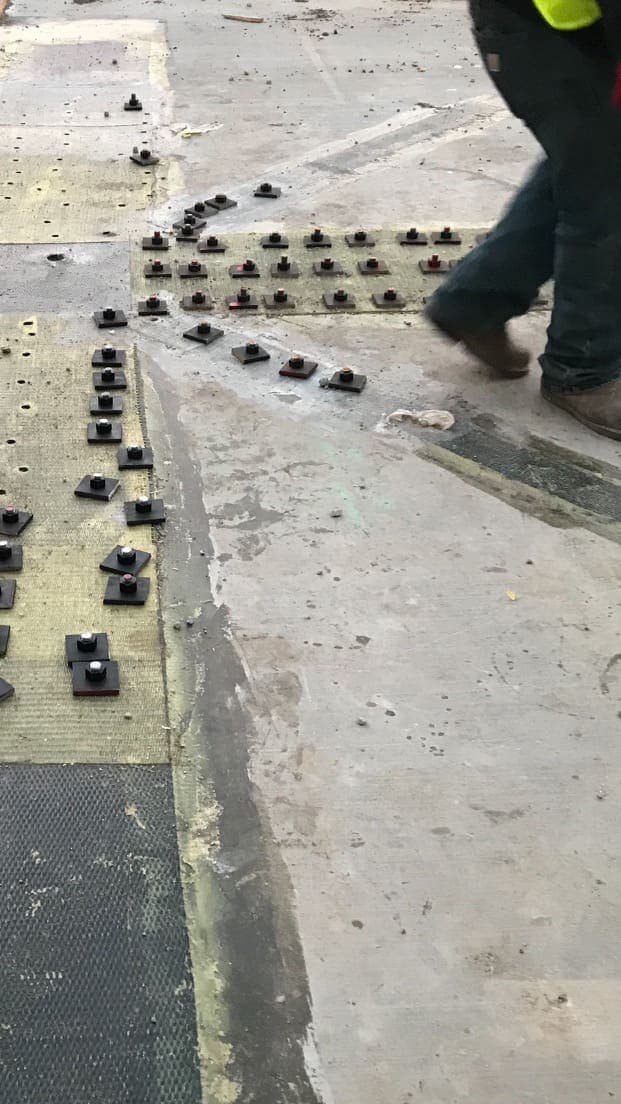
Delta Structural Technology completed composite strengthening for the AT&T Beer Garden project in Dallas. The engineering package addressed negative-moment flexure in an existing concrete T-beam. Carbon fiber reinforcement was designed for the tension region associated with that bending condition, with development length and service stresses checked alongside ultimate capacity. The project illustrates a focused strengthening intervention within an existing structural system.
- Market
- Hospitality & Recreation
- Services
- Carbon fiber flexural strengthening
- Location
- Dallas, Texas
- Structural members
- Concrete Beam Strengthening
Project challenge
A negative-moment region places the tension demand differently from a typical midspan condition. The reinforcement therefore needed to follow the required location and fiber direction rather than a generic underside repair detail. The design also had to account for the beam’s existing reinforcement and its condition under load when the new composite would be installed.
Project approach
Simpson Strong-Tie’s design, based on the structural information supplied by JQ Engineering, specified externally bonded unidirectional carbon fiber reinforcement. The calculation package evaluated the existing member, the contribution of the composite, and the bond length needed to develop the strip. It also checked service-level stresses in the steel, composite, and concrete. These related checks tied material placement to the behavior of the strengthened member under both service and design loading.
Delivery and coordination
The shop drawings and calculation report formed a coordinated package for the AT&T Beer Garden at South Akard Street. The reinforcement arrangement needed to remain consistent with the structural design documents and the existing beam geometry. Surface preparation, strip placement, and the available development zone were important installation interfaces because the design depended on the composite acting through its bond with the concrete.
Project significance
This project demonstrates the technical specificity of a small strengthening scope. Identifying negative-moment demand, establishing a developed strip length, and checking service stresses give the intervention a clear structural purpose. The result is a project example centered on the engineering relationship between an existing T-beam and the added composite reinforcement.