Xcel Tolk Station Pipe Support Repairs
Concrete restoration and glass FRP for deteriorated industrial pipe supports.
Delta Structural Technology completed concrete pipe-support rehabilitation at Xcel Energy’s Tolk Station. The repair scope combined removal of deteriorated concrete, treatment of exposed reinforcement, replacement concrete, glass-fiber wrapping and a protective finish.
- Market
- Energy
- Services
- Concrete repair and glass FRP
Project challenge
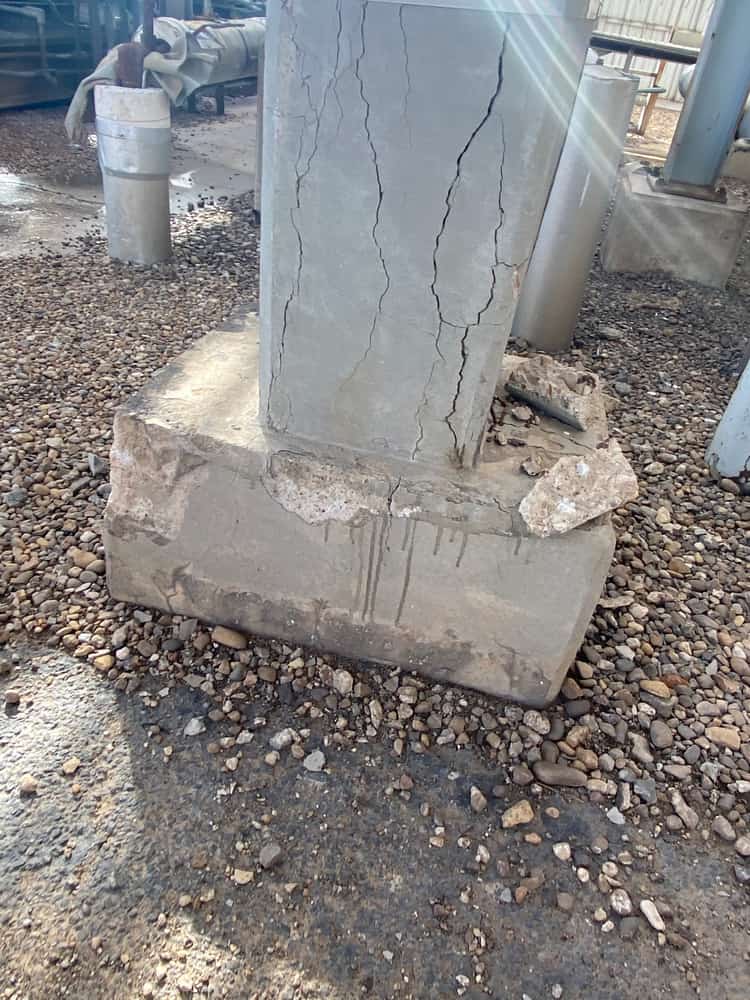
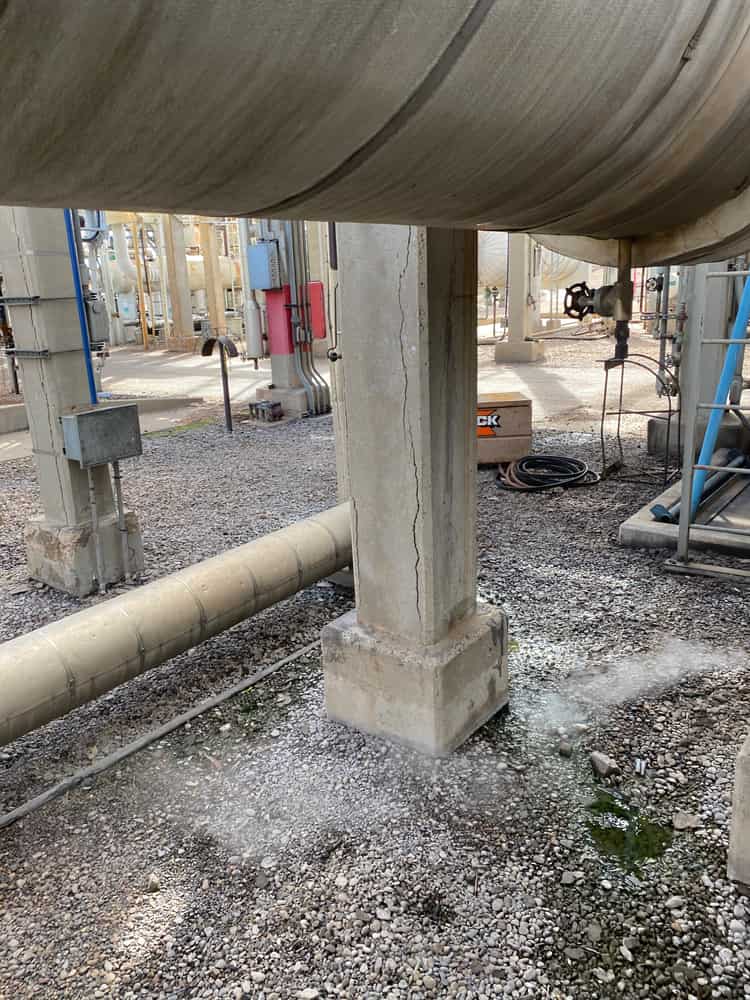
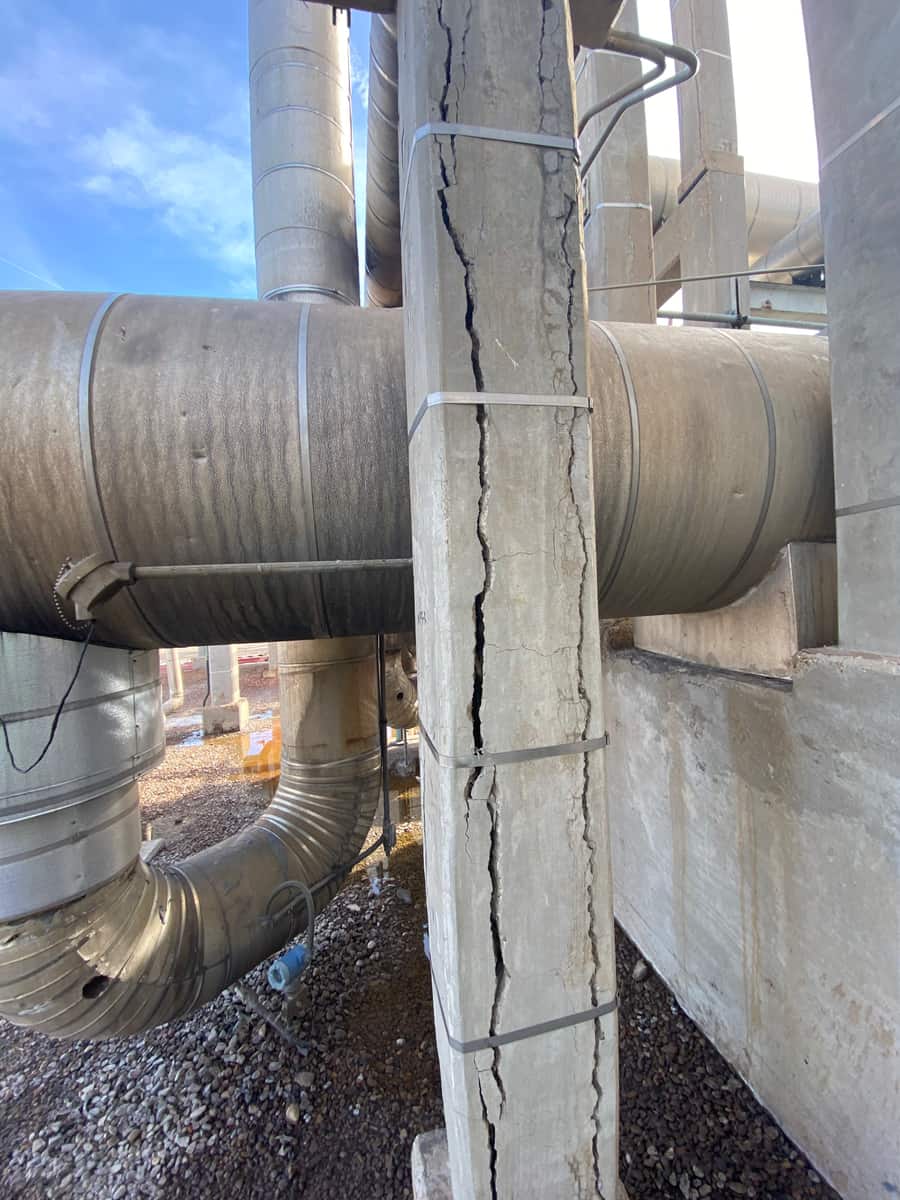
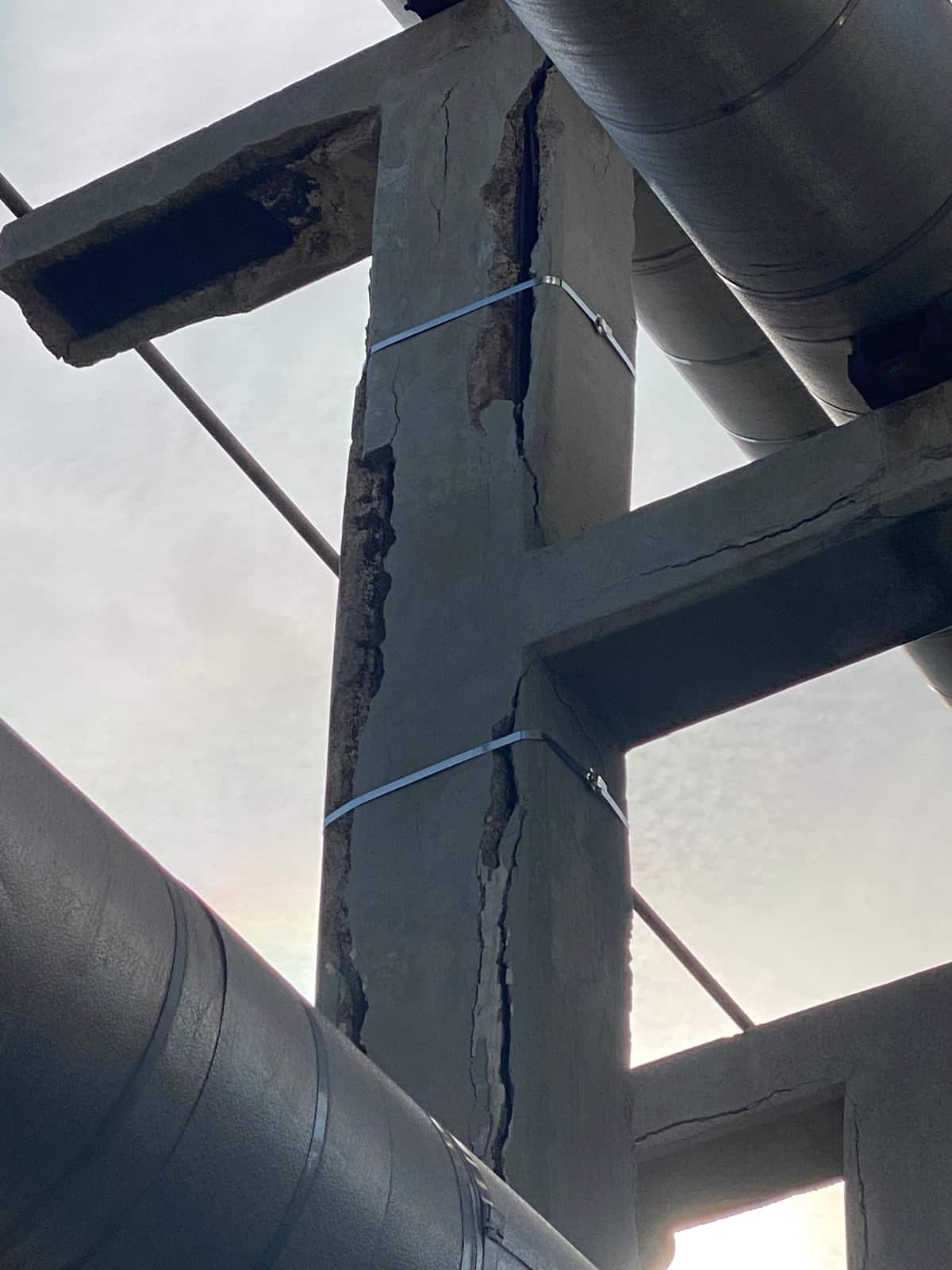
The supports carried large industrial piping within a congested steel-framed area. Their condition varied: one location had extensive concrete loss, while others required more limited removal. The planning basis covered twelve supports, with a typical support approximately seven feet high, six feet wide and one foot thick beneath the pipe. Short extensions continued upward beside the pipe, adding geometry that had to be included in the repair layout.
Project approach
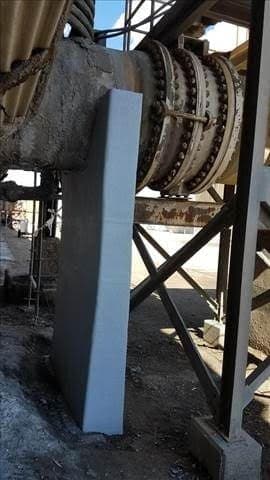
The repair sequence began with chipping deteriorated concrete and cleaning the reinforcing steel. Replacement concrete restored the support profile before application of two layers of glass FRP. The specified finish was two coats of Sikagard 670W. This sequence addressed both the damaged concrete section and its external protection. The quantity estimate used a typical removal allowance, recognizing that the visible deterioration differed from one support to another.
Delivery and coordination
Construction planning considered the work one support at a time and then evaluated how activities could be coordinated across several locations. Concrete removal, forming and placement, FRP application and coating each required their own work stage. The existing piping, nearby steel framing and uneven deterioration made access and preparation part of the repair effort. The project archive includes photographs of an exposed reinforced support and its finished coated appearance.
Project significance
Tolk Station shows how concrete restoration and composite reinforcement can be combined for industrial support structures. The work addressed localized deterioration at the interface between concrete supports and large piping. Its value as a project example lies in that coordinated repair sequence: expose and clean the steel, restore the section, apply the reinforcement and protect the finished surface.